True Structure
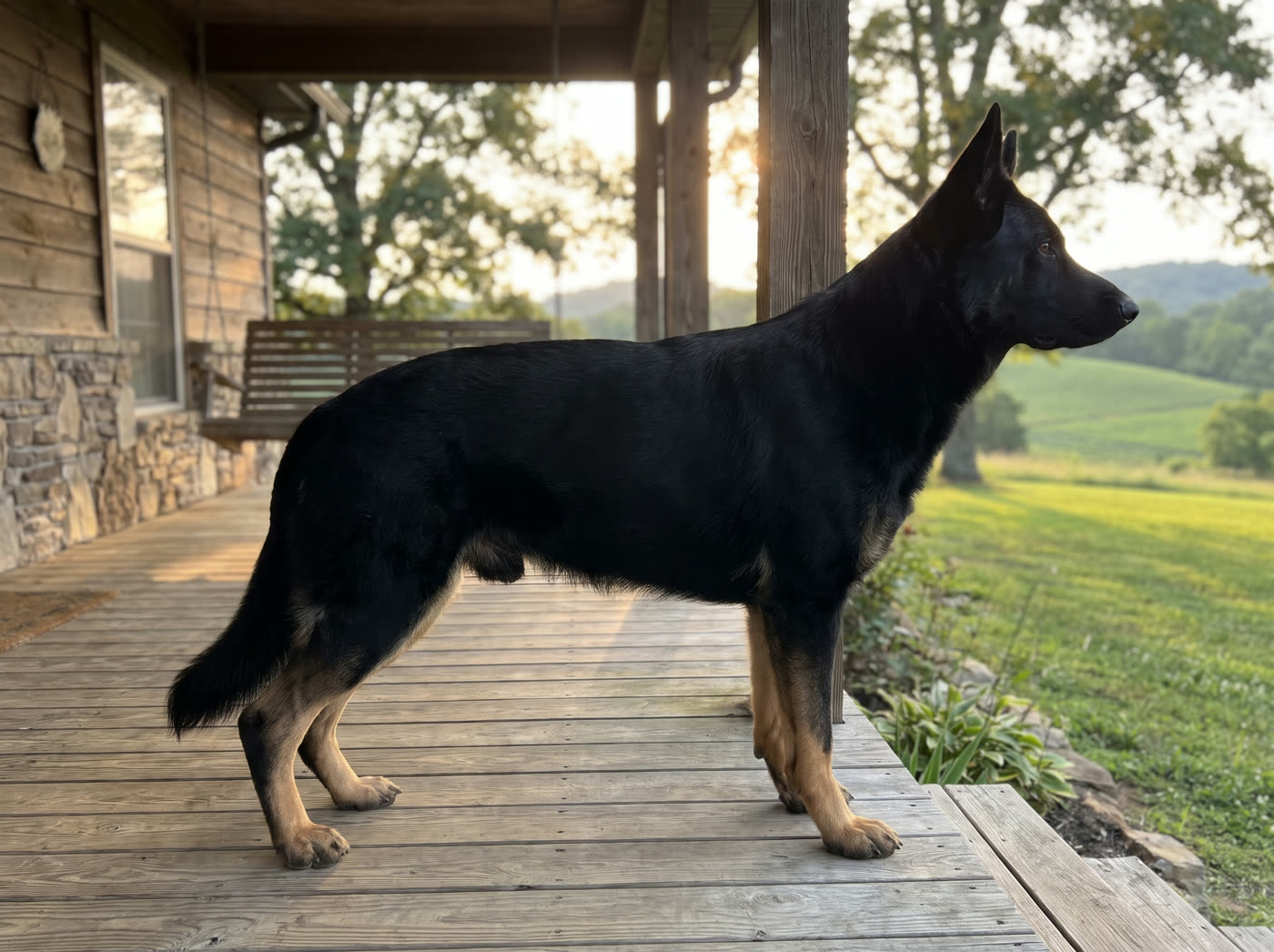
Straight backs, massive heads, and thick bones — the way the German Shepherd was originally bred. No sloped backs, no compromised structure.
Heritage Breeding Program
Large, straight-back German Shepherds with true structure. Where heritage meets strength.
Straight backs.
Massive heads.
Thick, heavy bone.
Real German Shepherds. Old School Bloodlines.
Built to last.
What Sets Us Apart
Straight backs, massive heads, and thick bones — the way the German Shepherd was originally bred. No sloped backs, no compromised structure.
Every breeding dog is OFA/PennHip certified and DM tested. We breed for longevity, not just looks. Your dog deserves a long, healthy life.
Our dogs are both loyal family companions and natural protectors. Stable temperament is never an afterthought — it is a requirement.
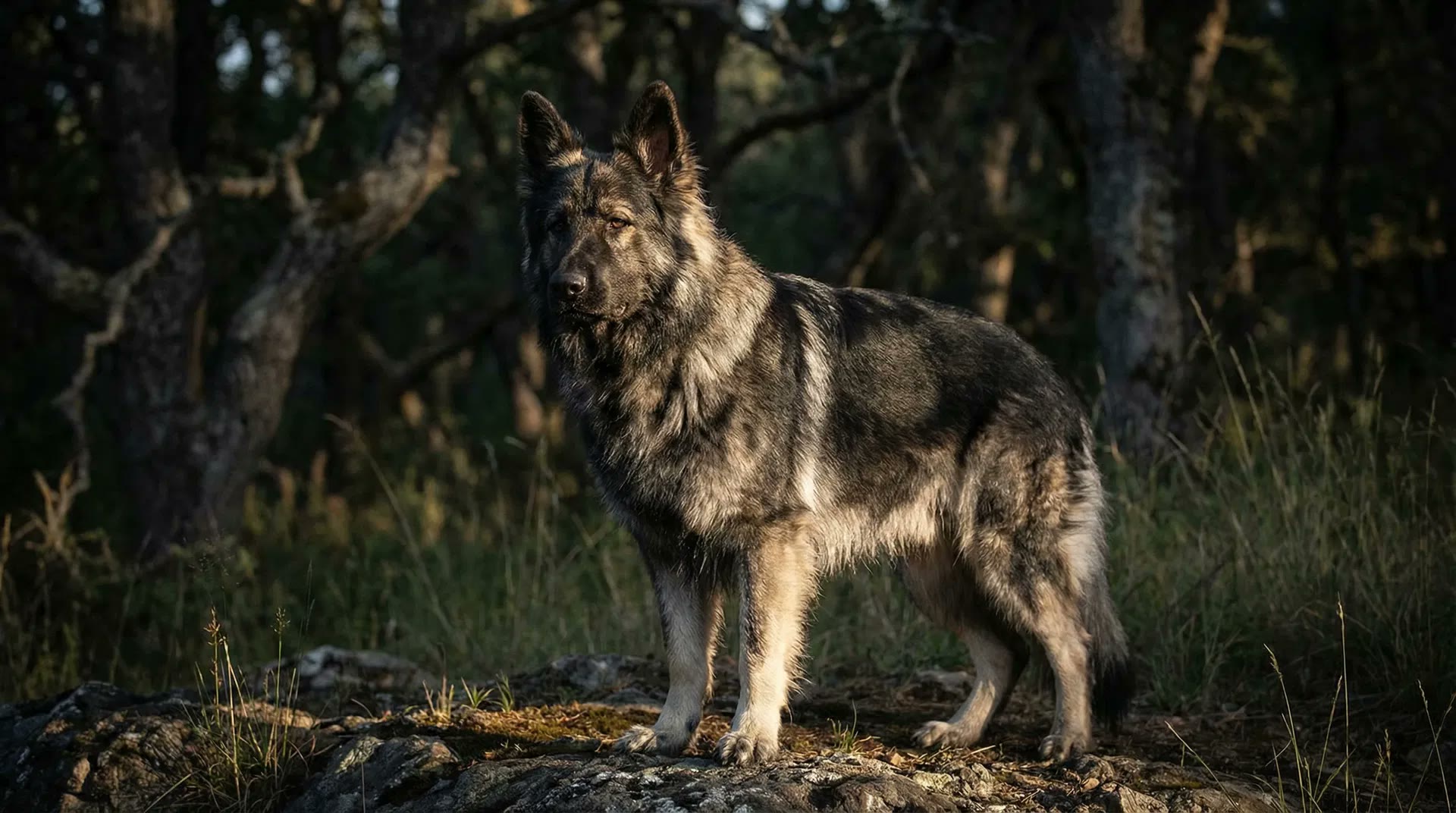 Old World · Heritage Lines
Our Philosophy
We breed large, old-fashioned German Shepherds with straight backs, massive heads, and thick bones — the way the breed was originally created. Not the sloped, roached-back dogs you see in modern show rings.
Our dogs are health tested, temperament evaluated, and raised with families in mind. We do not cut corners. We do not breed for quantity. Every litter is intentional.
Our Story“Utility is the true criterion of beauty.”
— Captain Max von Stephanitz, founder of the breed
Built like an athlete — capable of trotting for hours without fatigue.
A level topline. A deep chest. Correct angulation for natural, effortless movement.
Structure and health are inseparable.
Education Center · Foundation
Why straight backs matter, what went wrong with the modern German Shepherd, and why we are dedicated to preserving the original breed.
Over the past 50 years, the German Shepherd Dog has undergone a dramatic physical transformation — and not for the better. Modern show-line German Shepherds have been selectively bred for an extreme, sloped topline that bears almost no resemblance to the original breed standard established by Captain Max von Stephanitz in 1899. This exaggerated angulation has been linked to hip dysplasia, chronic pain, reduced mobility, and a shortened lifespan.
The original German Shepherd had a level or very slightly sloping topline, a strong and muscular back, a deep chest, and heavy, substantial bone. The dog was built like an athlete — capable of trotting for hours without fatigue. Our dogs are bred to this original standard. Straight backs. Massive heads. Thick bones. Correct angulation that allows for natural, effortless movement.
A dog with a straight back and correct structure is a healthier dog. The spine is properly aligned. The hips bear weight evenly. The muscles are not compensating for poor structure. Our breeding dogs are OFA and PennHip certified, and we have seen firsthand how proper structure correlates with better hip scores, fewer joint problems, and longer, more active lives.
Old World German Shepherds are larger than their modern counterparts — males typically ranging from 90 to 130 lbs, females from 75 to 95 lbs. But size alone is not the goal. Substance is. Thick, heavy bone. Dense muscle. A broad, powerful head. These are the hallmarks of a dog built to do real work — and to look impressive doing it.
The original German Shepherd was described as having a direct and fearless, but not hostile, expression. Confident. Self-assured. Loyal. Unfortunately, the same breeding practices that produced sloped backs also produced nervous, reactive, and unstable temperaments in many modern lines. Our dogs are evaluated for temperament as rigorously as they are for structure. We will not breed a nervous dog.
Education Center · History
The German Shepherd is one of the most intentionally created breeds in history. Understanding its origins helps explain why structure and working ability matter so much.
The German Shepherd Dog was officially established in 1899 by Captain Max Emil Friedrich von Stephanitz, a former cavalry officer who had long dreamed of creating the perfect German herding and working dog. At a dog show in western Germany, he purchased a dog named Hektor Linksrhein — a powerful, intelligent, wolf-like dog with a straight back and exceptional working ability. Von Stephanitz renamed the dog Horand von Grafrath and founded the Verein für Deutsche Schäferhunde (SV), the Society for German Shepherd Dogs, with Horand as the first registered dog.
Von Stephanitz’s vision was explicit: the German Shepherd was to be a working dog above all else. His famous declaration — “Utility is the true criterion of beauty” — defined the breed standard. The dog was to have a straight, level topline, a deep chest, strong hindquarters with moderate angulation, and the endurance to trot for hours without tiring. The breed quickly proved itself in herding, police work, military service, and search and rescue.
German Shepherds served extensively in both World Wars — as messenger dogs, guard dogs, search and rescue dogs, and companions to soldiers. Their intelligence, loyalty, and physical capability made them invaluable. After World War I, the breed was temporarily renamed “Alsatian” in Britain to distance it from its German origins, but the name German Shepherd was eventually restored.
As the breed grew in popularity, the show ring began to exert increasing influence over breeding decisions. Judges began rewarding extreme rear angulation — the exaggerated slope that became the hallmark of modern show-line German Shepherds. Breeders who wanted to win followed suit, and gradually the original, straight-backed working dog was replaced by a dog with a dramatically different silhouette. The working lines maintained the original structure, but the show lines diverged dramatically.
A growing number of breeders in the United States and around the world are working to restore the original German Shepherd type — large, straight-backed, heavily-boned, and built for work. These dogs are often called “Old World,” “Old Fashioned,” or “European” German Shepherds. They represent a return to von Stephanitz’s original vision: a dog of extraordinary utility, beauty, and character.
Our Dogs
Each sire is selected for exceptional structure, health, and temperament. Each dam is selected for exceptional structure, maternal instinct, health, and temperament.
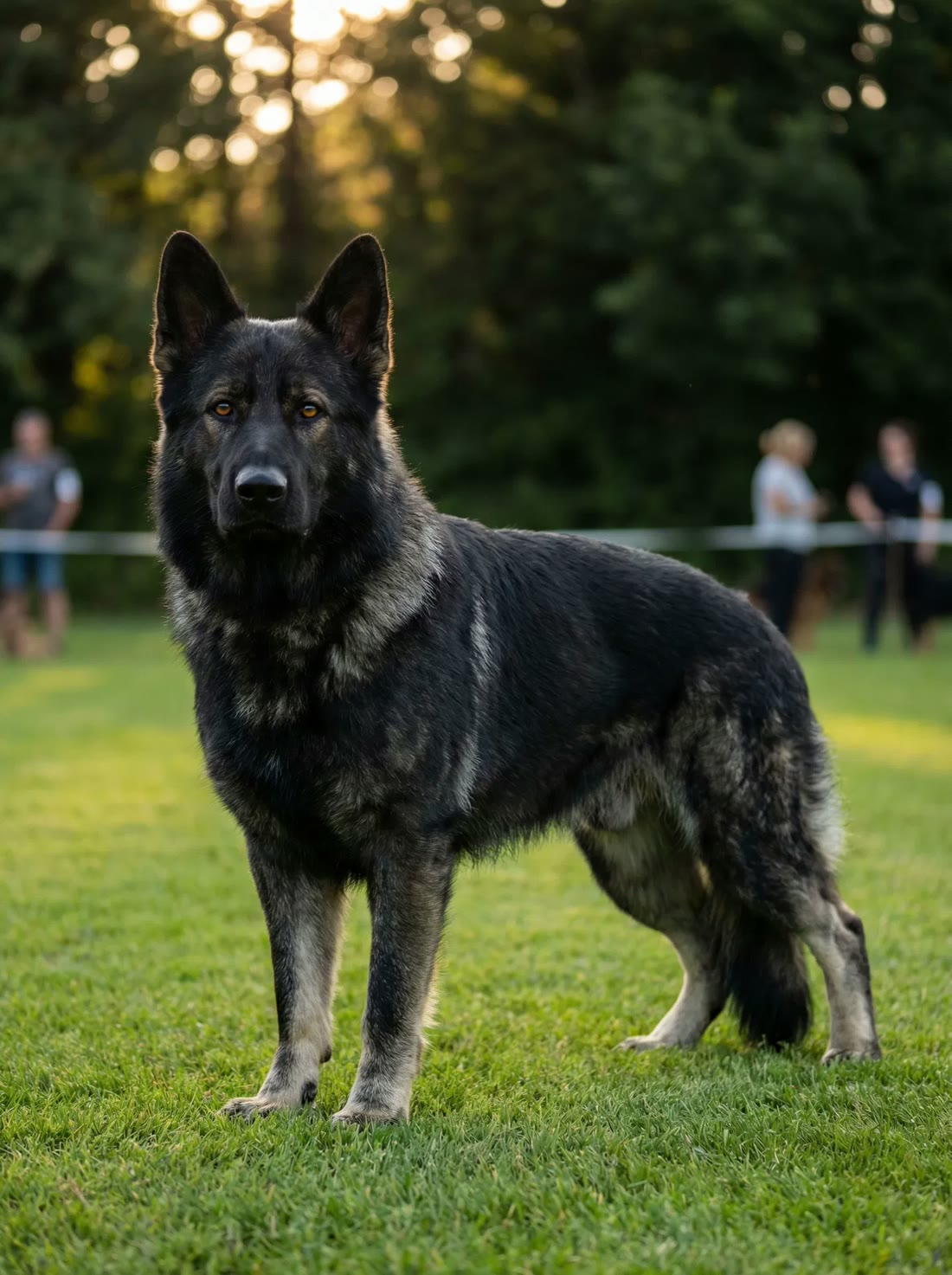
Breeding Sire · Black & Silver
Titan is the cornerstone of our breeding program. With a massive, broad head, straight-as-an-arrow back, and a coat that gleams silver and black, he turns heads everywhere he goes. His temperament is exactly what the breed should be — confident, calm, and deeply loyal. He has produced exceptional offspring that consistently inherit his structure and character.
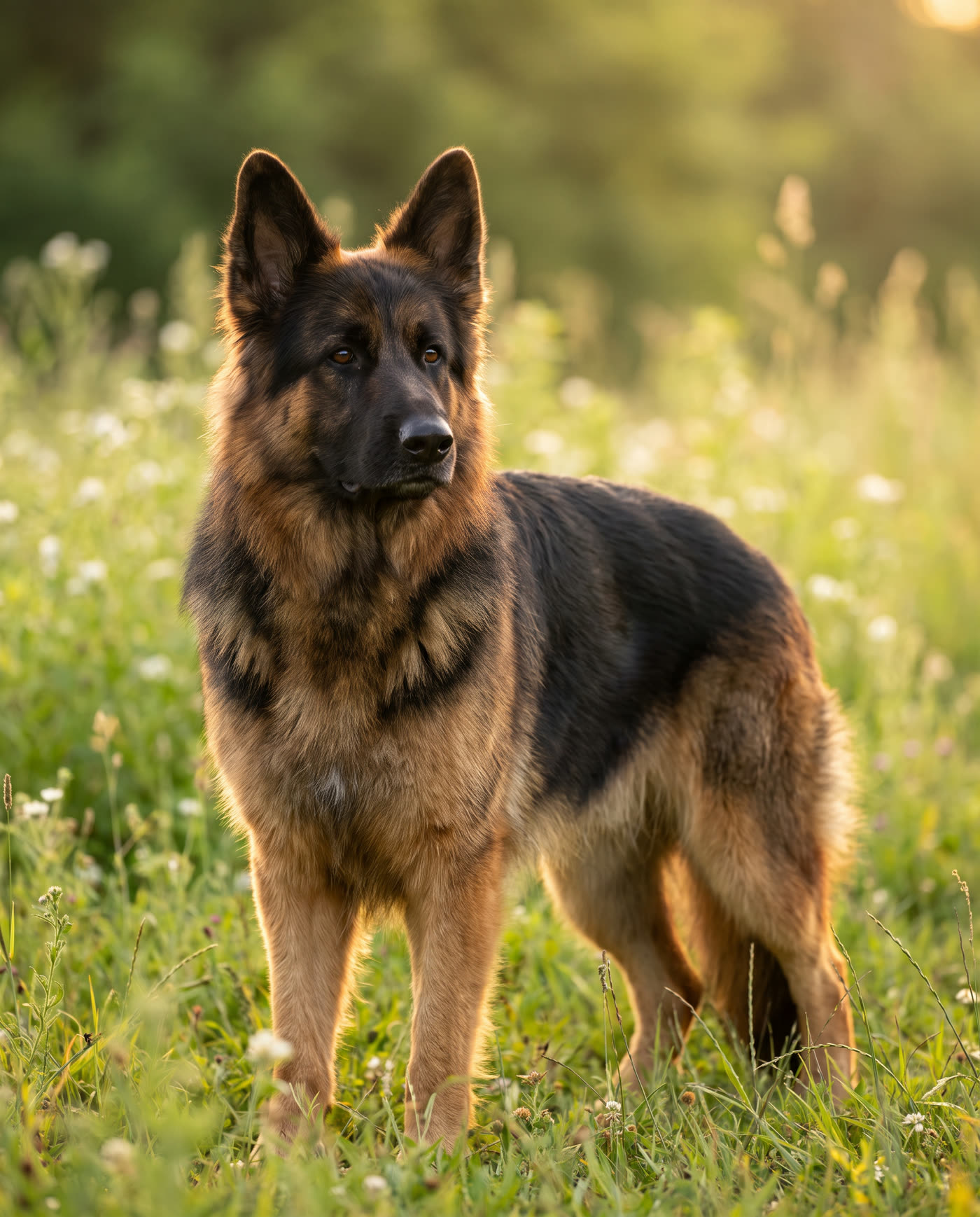
Breeding Dam · Black & Tan
Luna is an exceptional example of the old-fashioned German Shepherd female. She carries a dense Black and Tan coat, a strong straight back, and a broad, feminine head with full, dark eyes. Her temperament is outstanding — nurturing with puppies, loyal to her family, and naturally alert. She consistently produces large, well-structured puppies with stable temperaments.
More profiles coming soon. We are adding full profiles for all of our breeding males and females — contact us directly to learn more about our sires and dams.
Current Availability
Large, thick-boned, straight-backed German Shepherd puppies raised with love and socialized from day one. Health guaranteed. Bred for structure, temperament, and longevity.
Spring 2025 Litter
Born March 1, 2025
This litter is a cross between our top sire Titan vom Alten Blut (Black & Silver, 115 lbs, OFA Excellent) and our dam Luna vom Alten Blut (Black & Tan, 85 lbs, OFA Good). We are expecting large, well-structured puppies in Black & Silver, Black & Tan, and Sable. All puppies are raised in our home, handled daily, and begin early neurological stimulation at 3 days old.
Planned Breedings
Get on the waitlist early. Our litters fill up quickly. Reserve your spot before the puppies are born.
Planned Litter · Expected Summer 2025
This pairing is expected to produce large, heavily-boned puppies with exceptional Black & Silver and Silver Sable coats. Titan’s massive structure combined with Asha’s refined feminine lines should produce outstanding offspring.
Colors Black & Silver, Silver Sable
Join the WaitlistPlanned Litter · Expected Fall 2025
Our most anticipated pairing of the year. Bella carries the rare Black & Cream gene and has produced some of our most stunning offspring. Expect large, cream-marked puppies with incredible presence.
Colors Black & Cream, Bi-Color
Join the WaitlistPast Puppies
A showcase of the dogs we have produced. Real puppies from our breeding program, photographed as they grew into impressive adults.
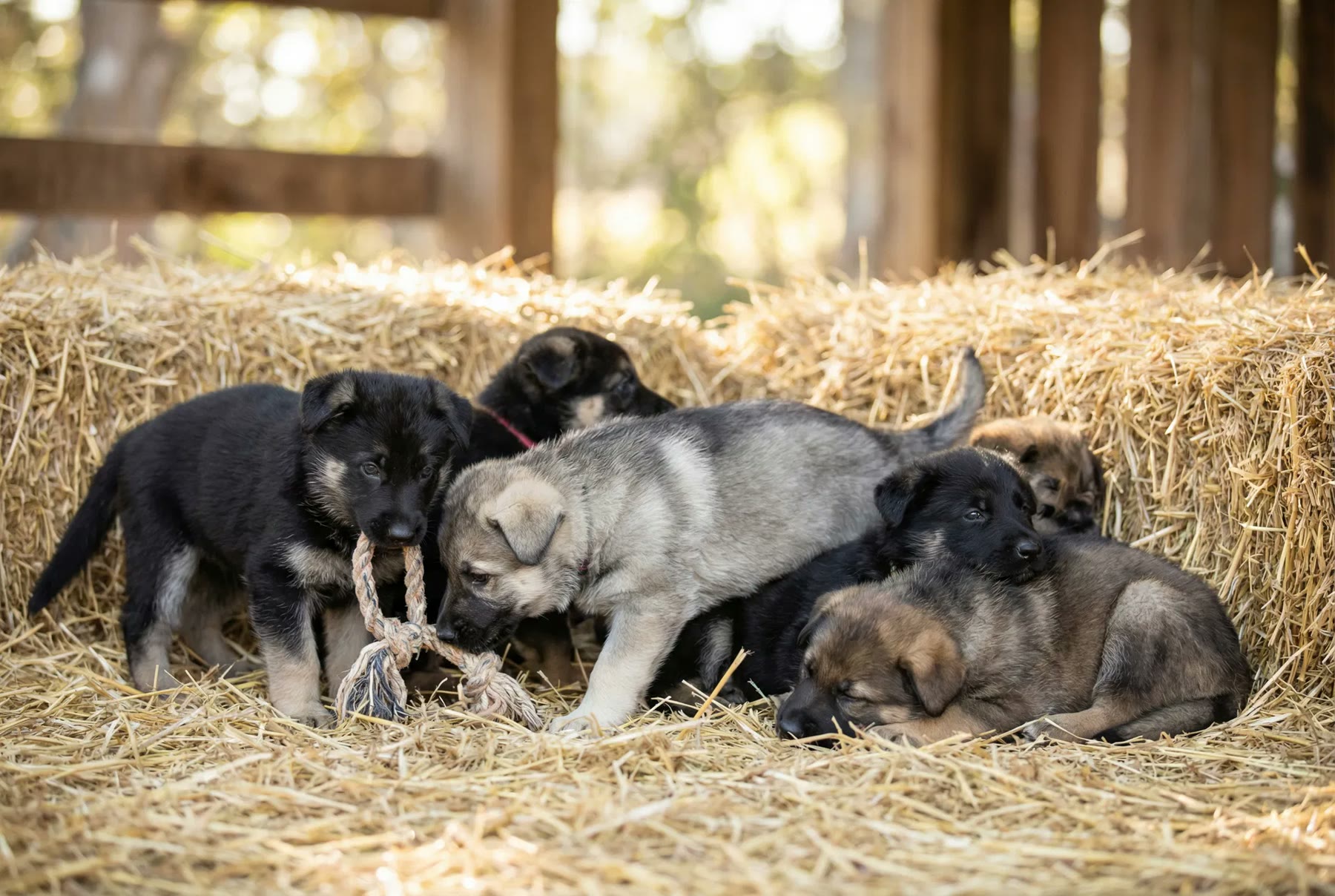
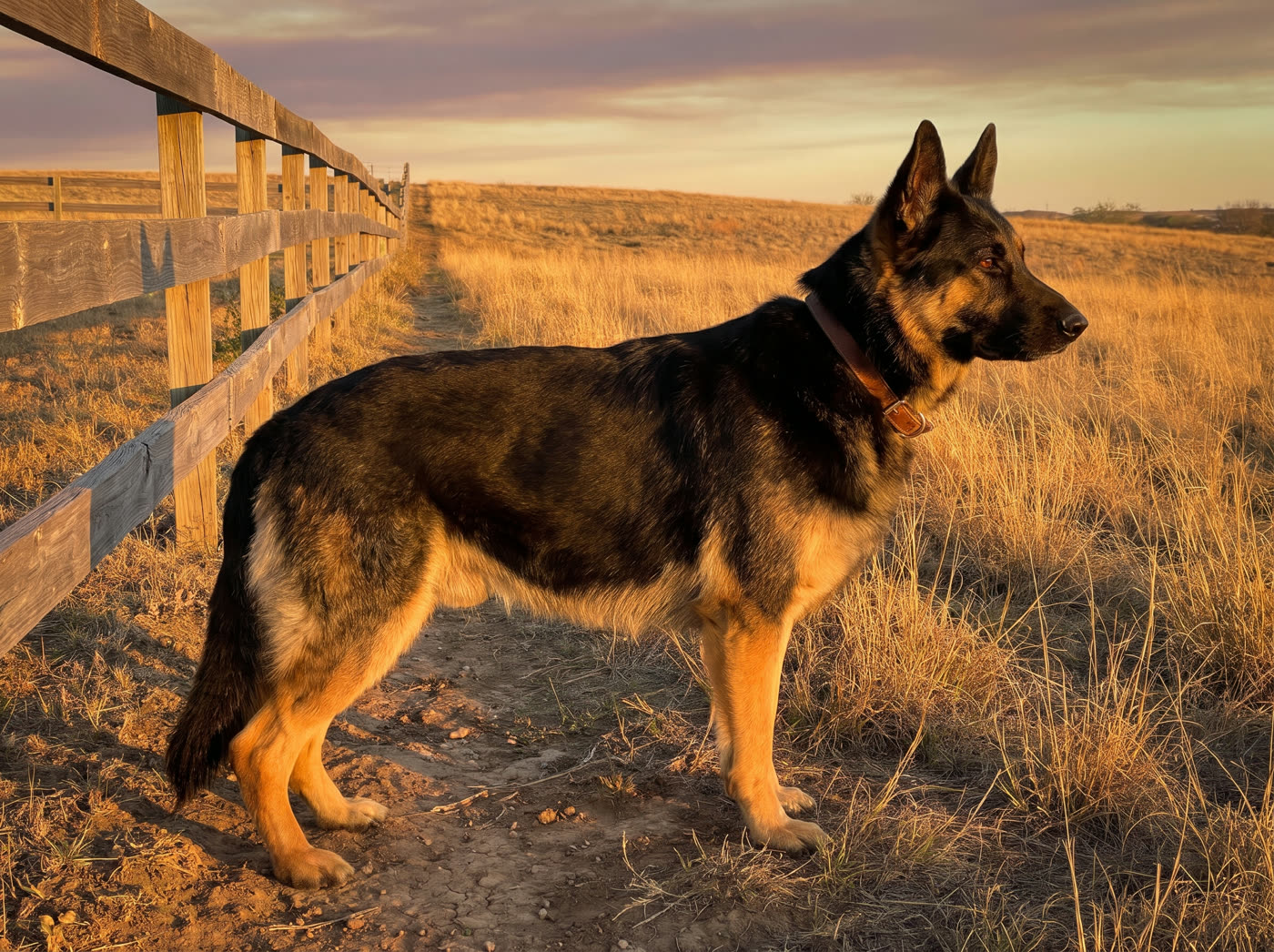
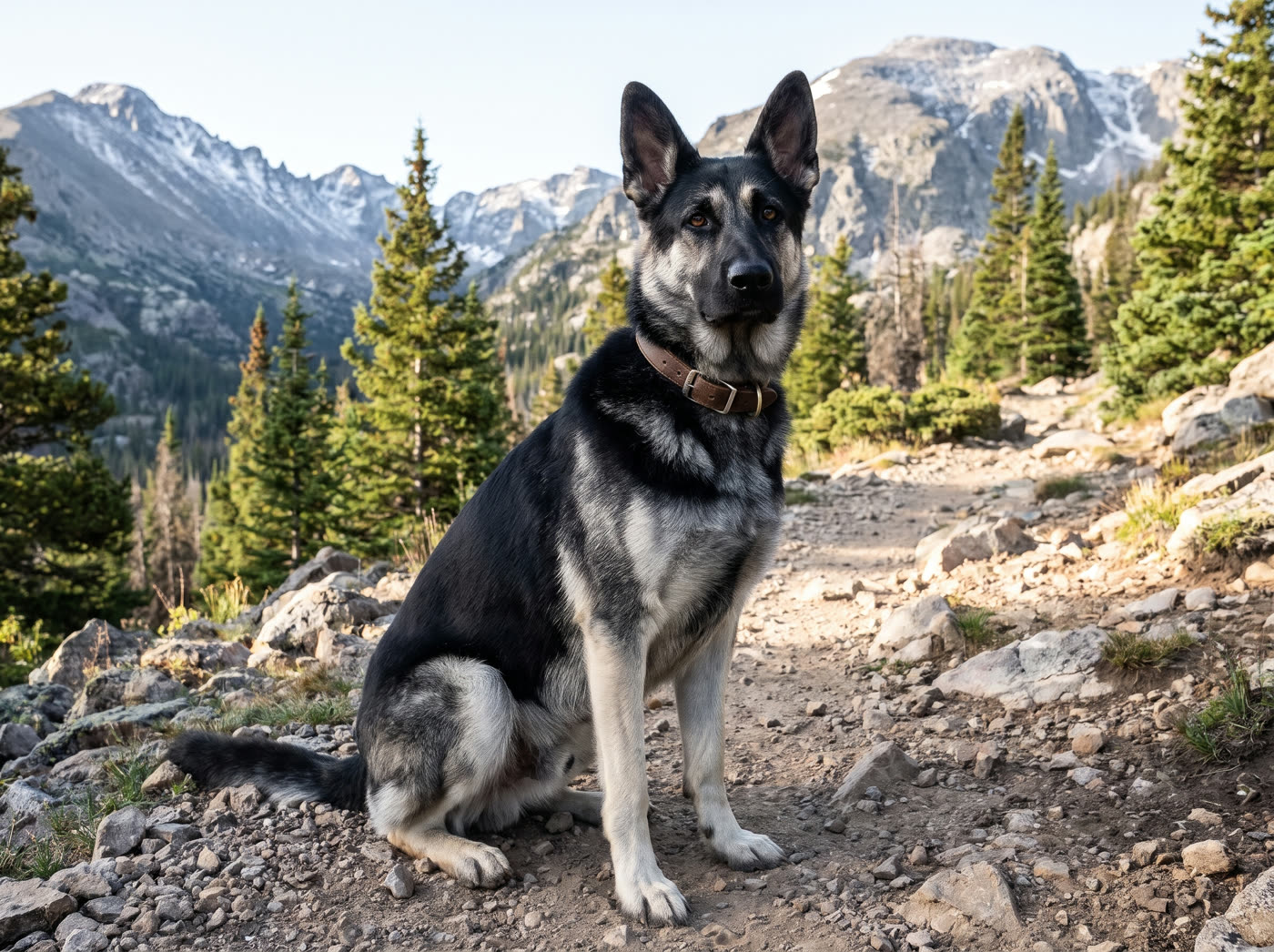
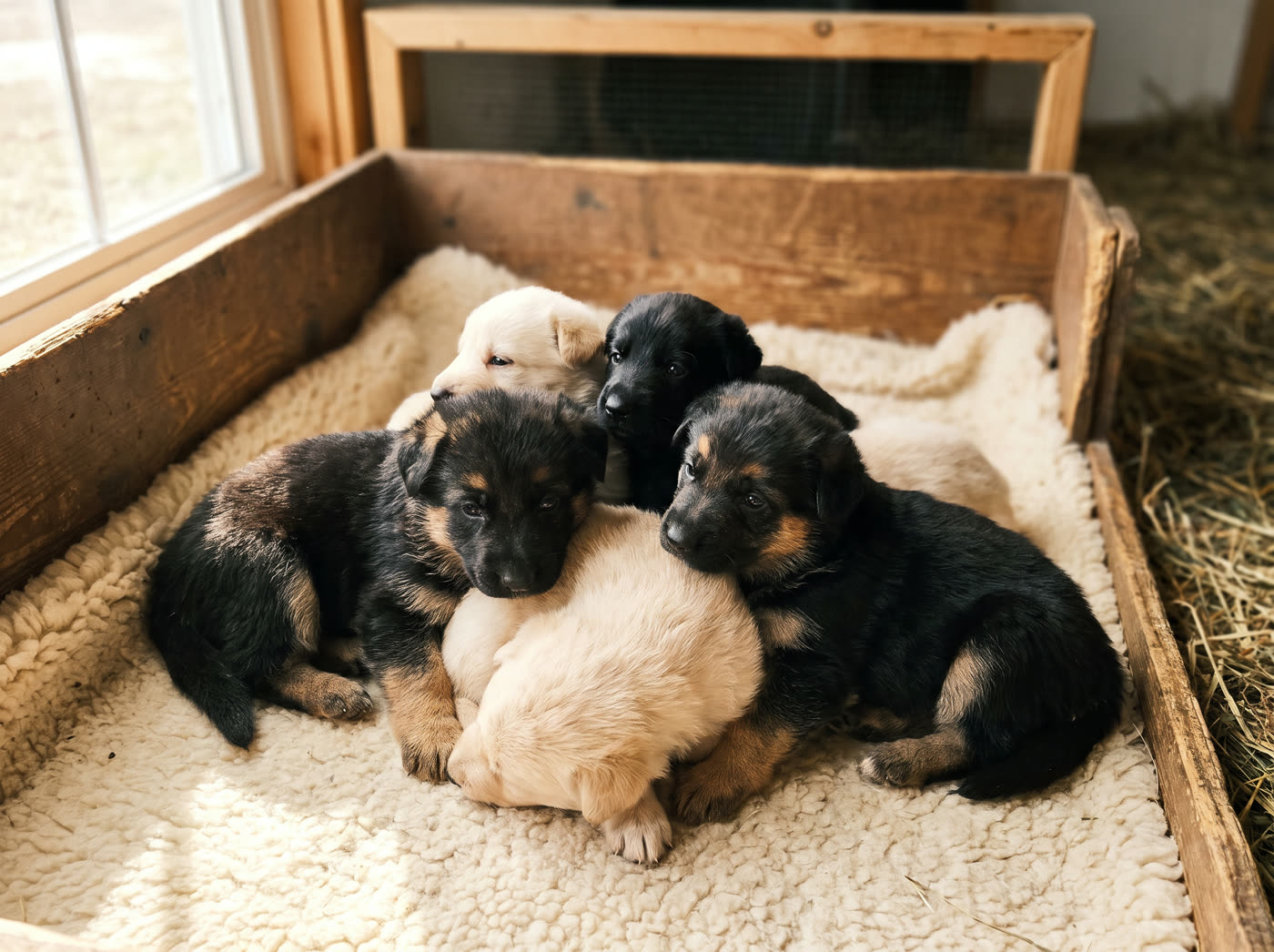
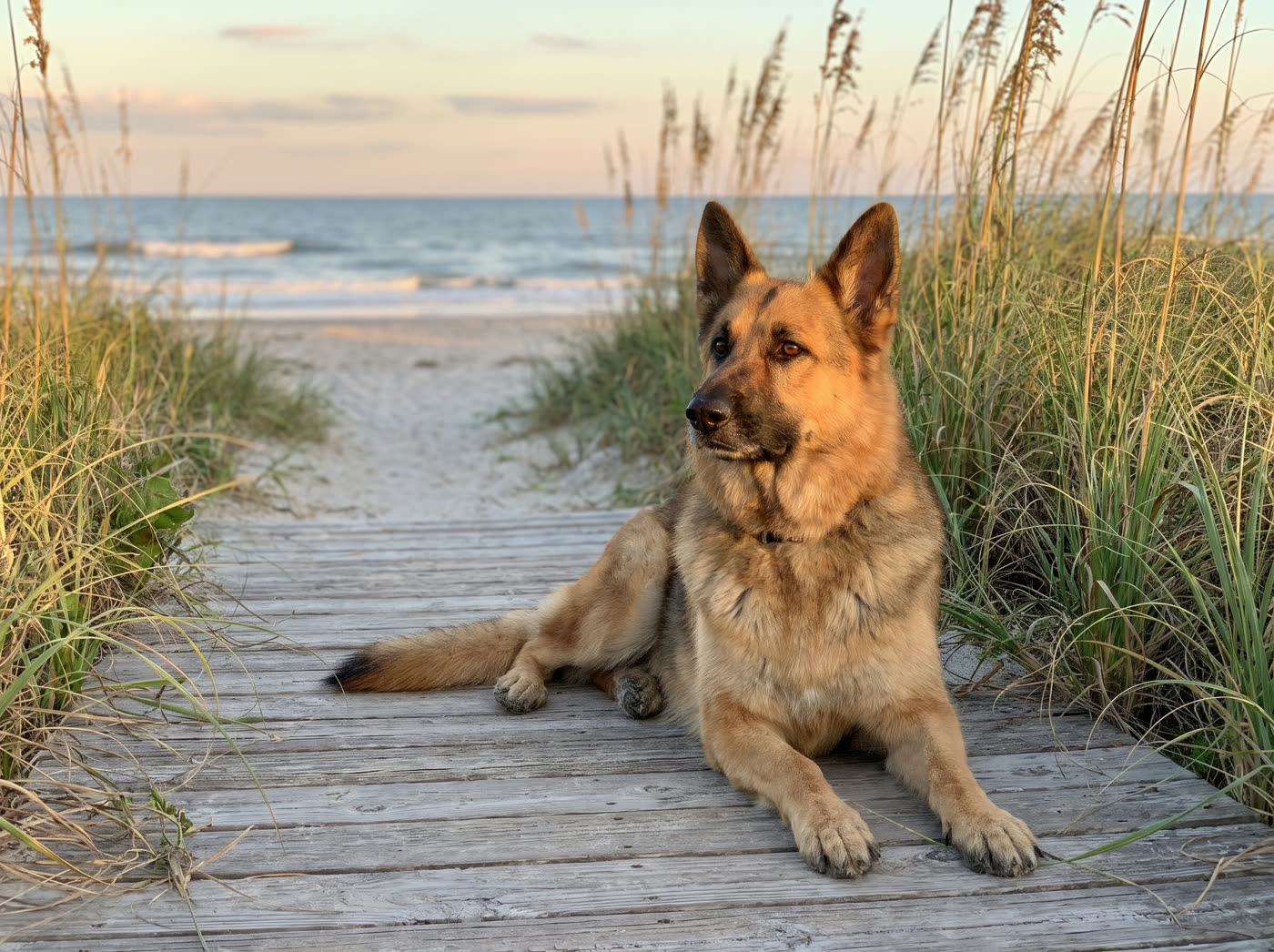
Want to see more? Follow us on Facebook and YouTube for regular updates, puppy videos, and adult dog showcases. Or contact us directly to see more photos of specific pairings.
GSD Education Center
We believe an educated buyer makes the best dog owner. Our Education Center covers everything from breed history to health testing, temperament, nutrition, and what to look for in a truly well-bred German Shepherd.
Health
Understanding the health tests that matter, what to ask a breeder, and how genetics influence the long-term health of your German Shepherd.
Hip dysplasia is a malformation of the hip joint where the ball and socket do not fit together properly. It is the most common serious health issue in German Shepherds and is influenced by both genetics and environment. Symptoms range from mild stiffness to severe, debilitating arthritis. Responsible breeders test every breeding dog’s hips before breeding. Look for OFA ratings of Excellent, Good, or Fair — or PennHip scores in the top 50th percentile for the breed.
OFA (Orthopedic Foundation for Animals) evaluates hip radiographs taken at 24 months and rates them Excellent, Good, Fair, Borderline, Mild, Moderate, or Severe. PennHip (University of Pennsylvania Hip Improvement Program) can be performed as early as 16 weeks and measures the degree of hip laxity using a distraction index (DI). A lower DI indicates tighter hips and lower risk of dysplasia. Both are valid testing methods. We use OFA for our breeding program and require Excellent or Good ratings for all breeding dogs.
Elbow dysplasia is a group of developmental conditions affecting the elbow joint, including fragmented coronoid process (FCP), osteochondrosis dissecans (OCD), and ununited anconeal process (UAP). Like hip dysplasia, it is influenced by genetics and can cause significant pain and lameness. OFA elbow ratings of Normal are required for all of our breeding dogs.
Degenerative Myelopathy is a progressive neurological disease that affects the spinal cord, typically beginning in dogs 8 years or older. It causes progressive weakness and paralysis of the hind limbs. DM is caused by a mutation in the SOD1 gene and is inherited in an autosomal recessive pattern. Dogs can be tested as At Risk (two copies of the mutation), Carrier (one copy), or Clear (no copies). We test all breeding dogs and will not breed two Carriers or two At Risk dogs together.
Before purchasing a German Shepherd puppy, ask to see the OFA or PennHip results for both parents — not just one. Ask for the actual OFA registration numbers so you can verify them on the OFA website (ofa.org). Ask about DM testing results. Ask about any health issues in previous litters. A responsible breeder will be transparent and happy to share this information. If a breeder cannot provide health testing documentation, walk away.
Even with excellent genetics, environmental factors play a significant role in joint health. Large breed puppies should not be over-exercised — no forced running, jumping, or stairs until at least 12–18 months. Feed a high-quality large breed puppy food that is not too high in calories. Keep puppies lean. Consider joint supplements (glucosamine, chondroitin, fish oil) starting at 6 months. These simple steps can dramatically reduce the risk of joint problems even in genetically predisposed dogs.
Training
Understanding the German Shepherd mind — their drives, their loyalty, their needs — and how to raise a confident, well-adjusted dog.
The German Shepherd is one of the most intelligent, loyal, and versatile breeds in the world. They are deeply bonded to their families, naturally protective, and possess a level of trainability that few breeds can match. However, they are not a breed for everyone. They require mental stimulation, physical exercise, clear leadership, and consistent training. A bored or under-stimulated German Shepherd will find ways to entertain itself — usually in ways you will not appreciate.
German Shepherds possess several distinct drives that make them exceptional working dogs: prey drive (the instinct to chase and catch), defense drive (the instinct to protect), and pack drive (the desire to work with and please their handler). Old World German Shepherds tend to have balanced drives — enough prey and defense drive to be effective protectors, but enough pack drive to be biddable, trainable family companions.
Socialization is the process of exposing your puppy to a wide variety of people, animals, environments, sounds, and experiences during the critical socialization window (3–16 weeks). A well-socialized German Shepherd is confident, adaptable, and friendly with strangers while still being protective of their family. We begin socialization in our home from birth — handling puppies daily, exposing them to household sounds, and beginning early neurological stimulation (ENS) at 3 days old.
German Shepherds respond best to positive reinforcement training combined with clear, consistent boundaries. They are sensitive dogs — harsh, punishment-based training methods can damage the relationship and create anxiety or aggression. Use high-value rewards (food, toys, praise) to motivate and reward correct behavior. Keep training sessions short (5–10 minutes for puppies), frequent, and fun. German Shepherds thrive when they have a job to do.
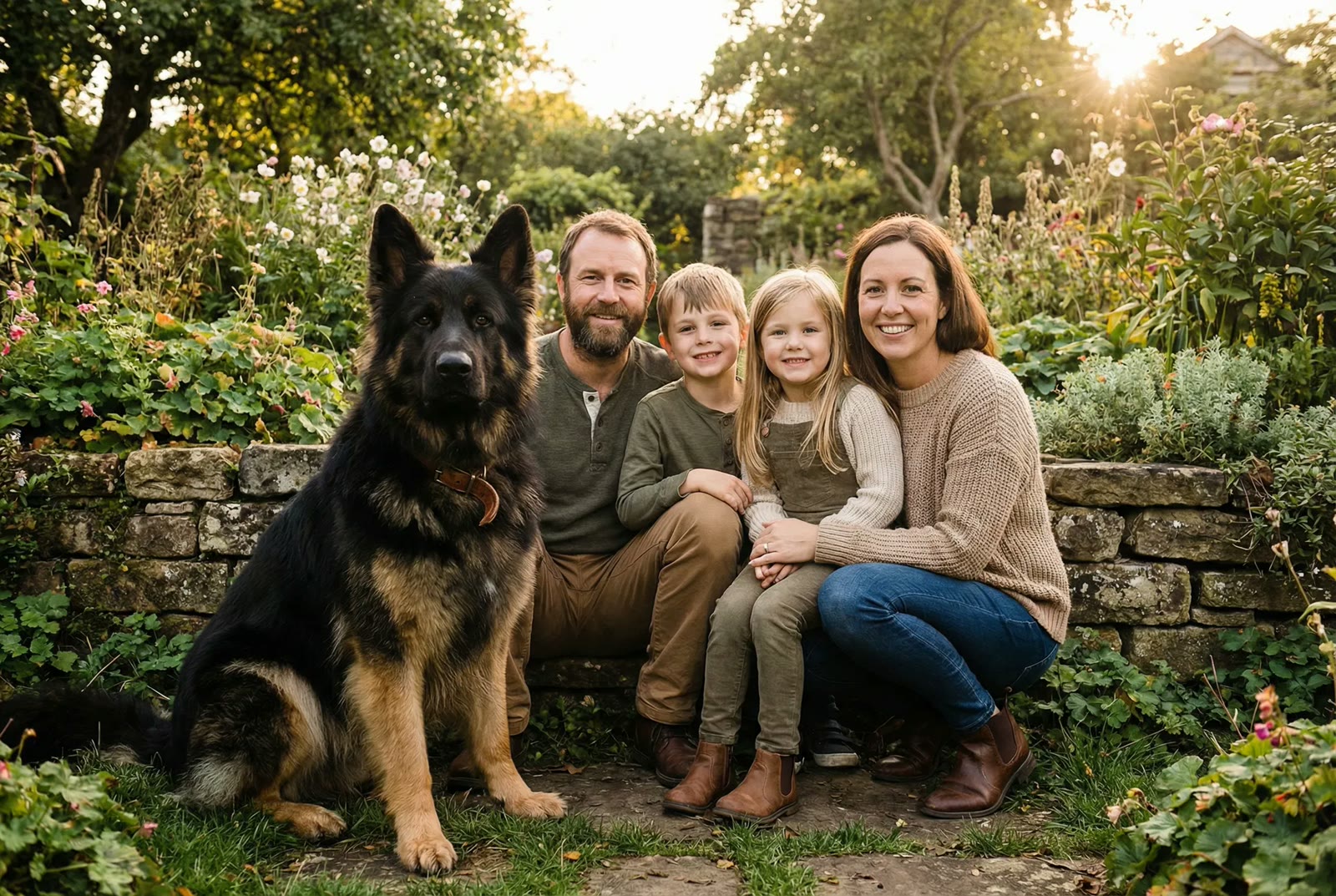
Despite their reputation as police and military dogs, German Shepherds are deeply loving family companions. They are typically gentle and patient with children they have been raised with, and they form extraordinarily strong bonds with their primary handlers. This natural protectiveness, combined with their intelligence and trainability, makes them one of the best family protection dogs in the world — as long as they are properly socialized and trained.
German Shepherds are high-energy dogs that require significant daily exercise — a minimum of 1–2 hours per day for adults. This can include walking, running, hiking, swimming, fetch, or structured training. Mental exercise is equally important — puzzle toys, training sessions, and nose work can tire a German Shepherd as effectively as physical exercise. Puppies should not be over-exercised — limit high-impact activities until growth plates close at 18–24 months.
Care
Feeding, grooming, and caring for your Old World German Shepherd from puppyhood through the senior years.
Large breed puppies have specific nutritional needs. They need a diet that supports steady, controlled growth. Look for a large breed puppy food with a calcium-to-phosphorus ratio between 1.2:1 and 1.4:1, and a protein content of 25 to 30%. Avoid foods with excessive calories or calcium, which can accelerate growth and increase the risk of developmental orthopedic disease. Feed 3 times per day until 6 months, then transition to twice daily.
Adult German Shepherds (18 months and older) should be fed a high-quality large breed adult food twice daily. The amount will depend on the dog’s size, activity level, and metabolism. A healthy German Shepherd should have a visible waist when viewed from above and you should be able to feel but not see the ribs. Obesity is a major contributor to joint disease in large breeds — keep your dog lean.
We recommend fish oil (omega-3 fatty acids) for joint health, coat quality, and inflammation reduction starting at 6 weeks. Glucosamine and chondroitin for joint support starting at 6 months for large breeds. Probiotics for digestive health, especially during stress or after antibiotic use. Vitamin E as an antioxidant. Always consult your veterinarian before starting any supplement regimen.
German Shepherds are heavy shedders — they shed moderately year-round and heavily twice a year during seasonal coat blows. Brush your dog at least 2 to 3 times per week with a slicker brush and undercoat rake. During shedding season, daily brushing will help manage the volume of loose hair. Bathe as needed every 4 to 8 weeks using a dog-specific shampoo. Trim nails every 3 to 4 weeks. Clean ears weekly. Brush teeth daily or at minimum 3 times per week.
Puppies require a series of vaccinations starting at 6 to 8 weeks and continuing every 3 to 4 weeks until 16 weeks. Core vaccines include Distemper, Parvovirus, Adenovirus (DAP/DHPP), and Rabies. Non-core vaccines should be discussed with your veterinarian based on your dog’s lifestyle and risk factors. Annual wellness exams are recommended for adults. We recommend hip and elbow radiographs at 24 months for all of our puppies.
Gastric Dilatation-Volvulus (GDV), commonly called bloat, is a life-threatening condition that affects large, deep-chested breeds including German Shepherds. The stomach fills with gas and twists, cutting off blood supply. Symptoms include unproductive retching, distended abdomen, restlessness, and rapid deterioration. GDV is always a veterinary emergency. To reduce risk: feed from a raised bowl, feed two smaller meals instead of one large meal, and avoid vigorous exercise for 1 hour before and after eating.
About Us · Who We Are
We are a dedicated breeding program focused exclusively on producing large, old-fashioned German Shepherds with straight backs, massive heads, thick bones, and stable temperaments. We started this program because we were frustrated — frustrated by the direction the breed had taken, and frustrated by how hard it was to find a truly well-built German Shepherd.
We have spent years studying bloodlines, traveling to see dogs in person, and carefully selecting breeding pairs that consistently produce the size, structure, and character that the German Shepherd was originally known for. We do not breed for quantity. We breed for quality — every single time.
Every dog in our program is health tested. Every breeding is intentional. And every puppy goes home with a family that has been educated and prepared to raise one of the most impressive dogs in the world.
Our Standards
All breeding dogs are evaluated for hip and elbow health before being included in our program.
We test for Degenerative Myelopathy to ensure we are not producing dogs at risk for this devastating disease.
We will not breed a dog with a roached or sloped back. Period. Structure is non-negotiable.
Broad, massive heads with strong muzzles are a hallmark of the old-fashioned German Shepherd and a priority in our program.
Our dogs have the bone density and substance that the breed was known for before modern show standards changed everything.
Every dog is evaluated for temperament. Confident, calm, and courageous — not nervous, reactive, or weak.
What Our Families Say
Real stories from real families who have brought home an Old World German Shepherd.
I have wanted a real German Shepherd my whole life — not one of those sloped-back show dogs. These are the real deal. Our boy is massive, healthy, and the best dog we have ever had. He is 110 lbs of pure muscle and loyalty. The breeder walked us through everything and was available every step of the way.
The education on this site alone convinced us. We knew exactly what we were getting before we even called. Our female is everything they promised — calm with the kids, alert when it matters. She is 2 years old now and still gets compliments everywhere we take her.
Former law enforcement. I know what a working dog looks like. These shepherds have the structure, the drive, and the temperament that most breeders cannot produce anymore. My boy passed his Canine Good Citizen test on the first try and has the presence of a dog twice his age.
We were nervous first-time dog owners. The breeder spent an hour on the phone with us before we even put down a deposit. They matched us with the perfect puppy — calm enough for our kids but confident enough to make us feel protected. Silver Sable is breathtaking.
We have had three German Shepherds over the years. This is by far the best-built dog we have ever owned. His back is perfectly straight, his head is enormous, and his bone is incredible. You can just tell he is built right. Healthy, happy, and a joy to train.
I specifically wanted a solid black German Shepherd with old-fashioned structure. This breeder was one of the only ones I found who actually produces them with the right build. My boy is 105 lbs, jet black, and absolutely commands attention. Worth every penny.
Puppy Application · Ready to Write Your Own Story?
We carefully screen every family to ensure our puppies go to the right homes. This is not just a sale — it is a lifelong partnership.
Fill out the form below with honest, detailed answers. This helps us understand your lifestyle and what you are looking for in a dog.
We personally review every application and follow up with a phone or email conversation to get to know you better.
Once approved, we work with you to select the right puppy based on your goals, lifestyle, and the available litter.
A deposit secures your puppy. We keep you updated with photos and videos until your puppy is ready to go home at 8 weeks.
What We Look For
Our dogs are large, intelligent, and active. They thrive in homes where they are treated as family members and given the structure, exercise, and mental stimulation they need.
Important Notes
Apply Now
Please be thorough and honest in your answers. The more we know about you and your lifestyle, the better we can match you with the perfect dog.
Not loading? Open the application in a new tab, or call/text (555) 000-0000 or email info@oldworldgsd.com.
Policies & Guarantee
We stand behind every puppy we produce. Our contract is clear, fair, and designed to protect both you and your dog.
All puppies are guaranteed against life-altering genetic defects for 2 years from the date of birth. This includes hip dysplasia (OFA rated Fair or worse), elbow dysplasia, and Degenerative Myelopathy (DM). In the event of a covered condition, we will replace the puppy with one of equal value from a future litter. We do not offer cash refunds.
We strongly require that all puppies sold on a pet contract not be spayed or neutered before 18 months of age (24 months preferred). Early spay/neuter has been scientifically linked to increased rates of joint disease, cancer, and behavioral issues in large breed dogs. Spaying or neutering before 18 months voids the health guarantee.
We have a lifetime return policy. If for any reason you cannot keep your dog, we require that you return the dog to us rather than rehoming, surrendering to a shelter, or selling the dog. We will work to find the dog a new home through our network. This is a lifelong commitment on our part.
All puppies are sold on a limited AKC registration (pet/companion only) unless a full registration agreement has been negotiated in writing prior to purchase. Breeding a dog sold on limited registration is a violation of this contract.
A $500 non-refundable deposit is required to reserve a puppy or a spot on the waitlist. The deposit is transferable to a future litter if the current litter does not produce a puppy that meets your requirements. The deposit is applied to the final purchase price.
The buyer agrees to provide proper veterinary care, nutrition, exercise, and socialization for the dog. The buyer agrees to follow our recommended vaccination and deworming schedule. The buyer agrees to contact us before making any major health decisions to allow us to provide guidance.
The full contract will be provided and must be signed before a puppy goes home. Questions? Contact us — we are happy to walk you through everything.
Get in Touch
Have questions about our dogs, available puppies, or our breeding program? Whether you are a first-time German Shepherd owner or an experienced handler, we are happy to answer your questions and help you find the right dog for your family.
“We do not just sell puppies. We guide you through the entire process — from choosing the right dog to raising it the right way.”
Whether you are looking for a family companion, a natural protector, or simply the most impressive German Shepherd you have ever seen — we are here to guide you every step of the way.